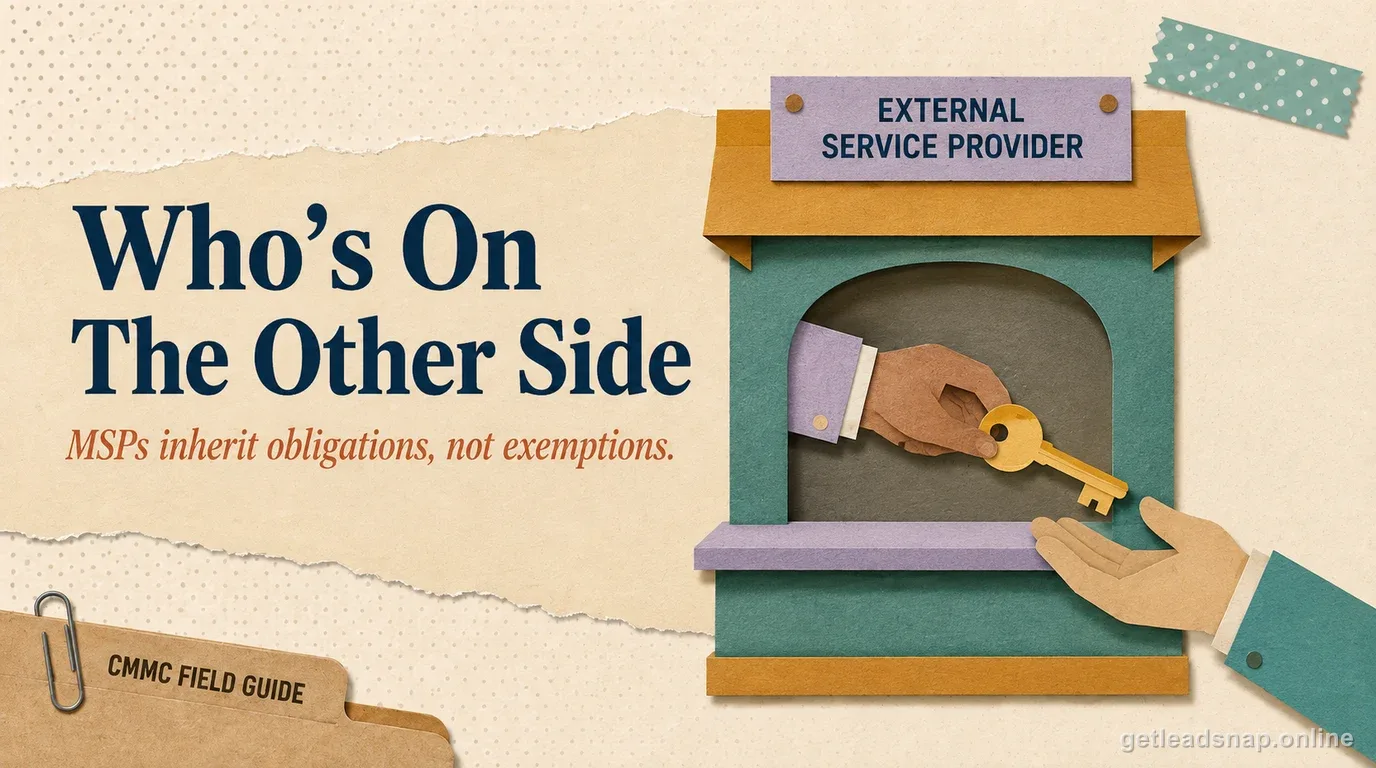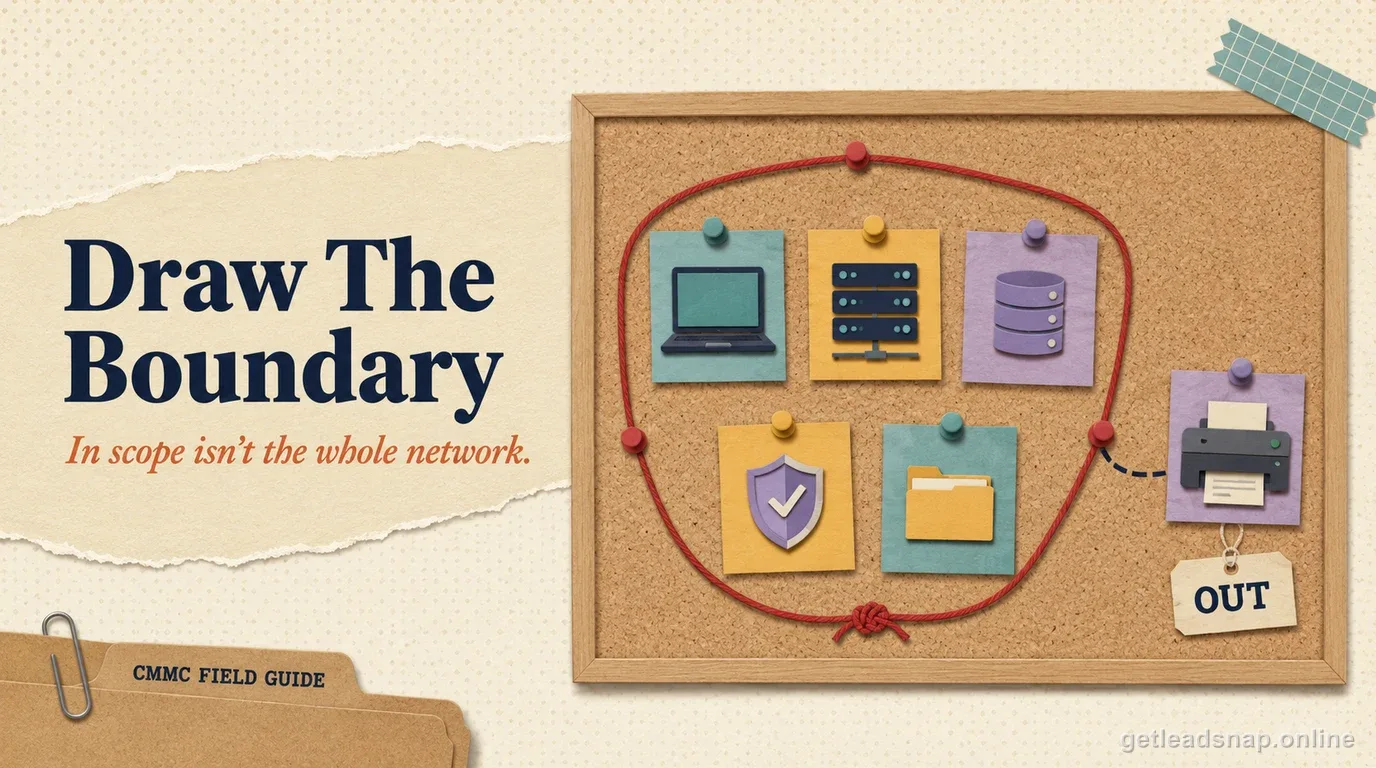
The goal is not to hide MSP systems from scope. It is to design services so MSP corporate systems do not unnecessarily process, store, or transmit CUI and so the systems that provide security protection are clearly identified.
A small defense contractor gets more value from asking a narrower question: where inside the FCI/CUI boundary does this requirement apply, who owns it day to day, and what evidence currently backs it up?
The rule in plain English
Remote administration, ticket attachments, backup consoles, log platforms, screenshots, support recordings, and technician laptops can create scope paths. Map those before claiming the MSP environment is separate.
Use least-data support practices: collect only what is needed, keep CUI out of tickets where practical, and use controlled client-side or dedicated management paths for privileged work.
How to implement it without overbuilding
Separate client administration identities from ordinary MSP productivity accounts. Consider privileged access workstations, client-specific vaulting, and brokered access that reduces direct data exposure.
Design support procedures so diagnostics and screenshots do not automatically copy CUI into multi-tenant ticketing or knowledge systems.
What evidence to keep
Keep architecture diagrams, access design, data-handling rules, ticket redaction process, technician-device standards, and client-specific logs.
Document unavoidable MSP systems that do become relevant rather than pretending they do not exist.
Where teams get into trouble
The main mistake is a policy saying 'never put CUI in tickets' while technicians routinely paste screenshots and files. Another is broad standing admin access from ordinary MSP endpoints.
Small-contractor walkthrough
Technicians normally paste screenshots and log snippets into a multi-tenant ticketing platform. For CUI clients, the MSP redesigns support so sensitive artifacts stay in controlled client-side locations and privileged work originates from dedicated administrative paths.
- Map MSP data flows.
- Minimize ticket CUI.
- Separate privileged identities.
- Use controlled admin endpoints.
A contract cannot make provider systems out-of-scope when they actually handle CUI or SPD
An MSP can reduce how much provider infrastructure is involved in a client's CUI environment, but the design has to follow the rule's data test. If provider-owned systems process, store, or transmit CUI or Security Protection Data, the relevant service is not made out-of-scope merely because the contract says 'no CUI.' Logs, configuration data, backups, screenshots, command output, diagnostic files, and alerts can create provider scope even when normal ticket text is clean.
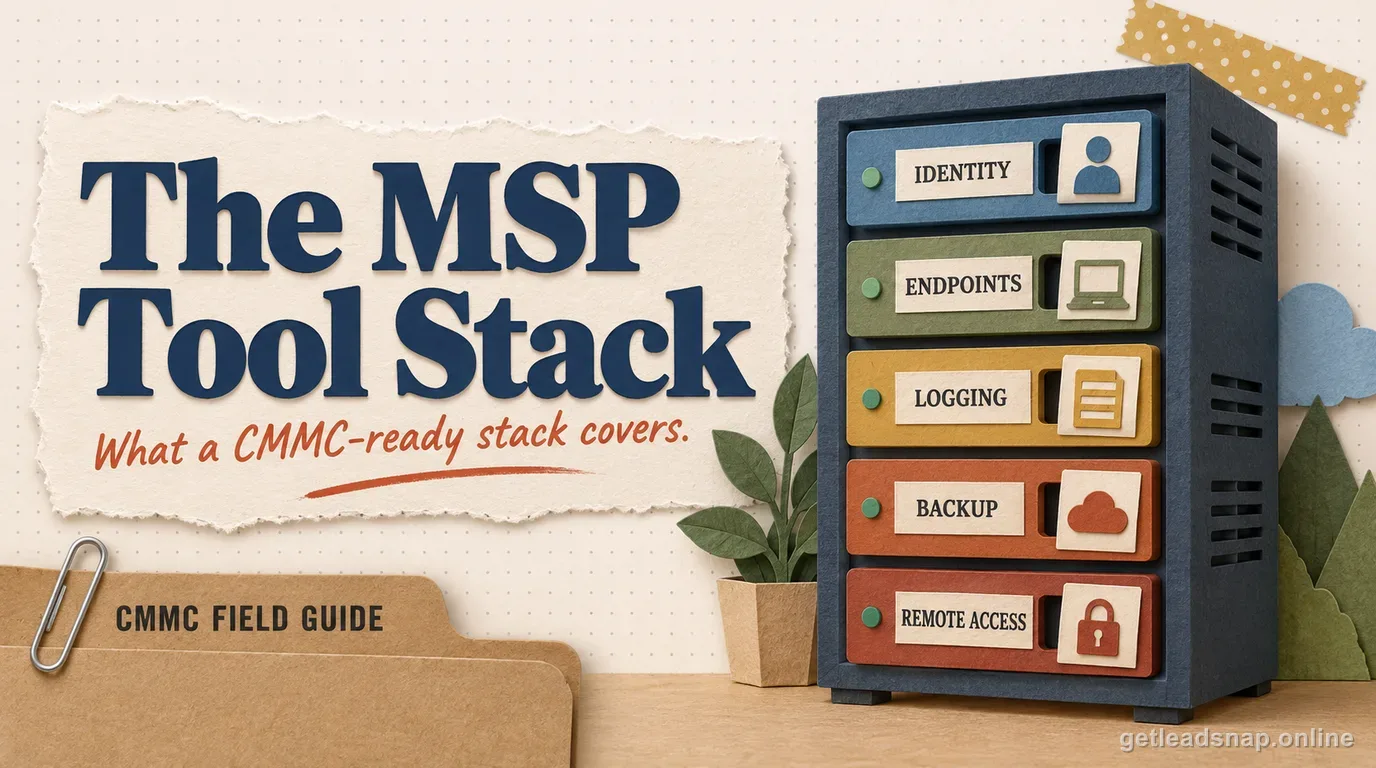
Start with a tool-by-tool data-flow review. Observe what the RMM collects, what the SIEM ingests, what backup stores, what technicians see during remote support, what ticketing automatically captures, where command output is retained, and whether password or documentation tools contain client configuration. Observed data flow matters more than product category or policy wording.
Use client-side or dedicated control points when they genuinely reduce data movement
Where practical, keep sensitive artifacts in the client's controlled environment and let MSP personnel access them through a managed administrative path. Examples include client-side log storage with brokered analyst access, privileged jump hosts, customer-controlled evidence repositories, client-side backup repositories, or remote support configured to avoid automatic file transfer and recording. Each design still needs scoping analysis; no universal architecture guarantees the MSP stays outside scope.
Separate MSP corporate productivity from client administration. Use dedicated admin identities, strong authentication, controlled technician endpoints, credential vaulting, least privilege, and client-specific logging. Reduce standing access where practical. The objective is a smaller, clearer, testable support path—not hiding the provider from an assessor.
Test messy support cases rather than the perfect help-desk demo
Replay a real support ticket involving a CUI user. Check whether screenshots, clipboard contents, command output, attachments, or logs are copied into provider systems. Repeat for a security alert, backup restore, endpoint isolation, privileged change, and emergency support. These events reveal data movement that an ordinary password-reset ticket never exposes.
If a provider platform is in scope, document it honestly and make evidence retrieval efficient rather than forcing an artificial out-of-scope claim. If architecture changes truly remove CUI or SPD from provider assets, preserve the technical configuration and test results supporting that conclusion.
Review the design after RMM, backup, SIEM, ticketing, or remote-support product changes. A vendor update that enables session recording, cloud log retention, or new telemetry can alter the data path without changing the MSP contract.
Last-mile depth check
Also evaluate technician endpoints and browser sessions. Even when files stay client-side, an MSP workstation may display CUI, cache browser data, retain clipboard contents, save downloaded logs, or create local support artifacts. The support design should define what technician devices can do and what controls prevent incidental provider-side copies.
A short working check
- ✓Map MSP data flows.
- ✓Minimize ticket CUI.
- ✓Separate privileged identities.
- ✓Use controlled admin endpoints.
- ✓Limit standing access.
- ✓Document unavoidable scoped systems.
Common questions
Can an MSP be completely out of scope?
Possibly in some architectures, but only if the facts support it. Security-protection functions and access paths can still make MSP components relevant.
Do support screenshots matter?
Yes if they contain CUI and are stored in MSP systems.
Is a client VPN enough separation?
Not by itself. Identity, technician endpoints, ticketing, logging, vaulting, and data copies also matter.
Should we delete evidence to stay out of scope?
No. Design the service securely; do not destroy required records or conceal actual flows.
Can an MSP stay out of scope by banning CUI in tickets?
Not by policy alone. Actual CUI and Security Protection Data paths across RMM, logs, backups, support, tickets, and technician systems drive the scoping analysis.
Official sources used for this guide
Open the primary source before making a contract-specific decision. Regulations and program implementation can change.