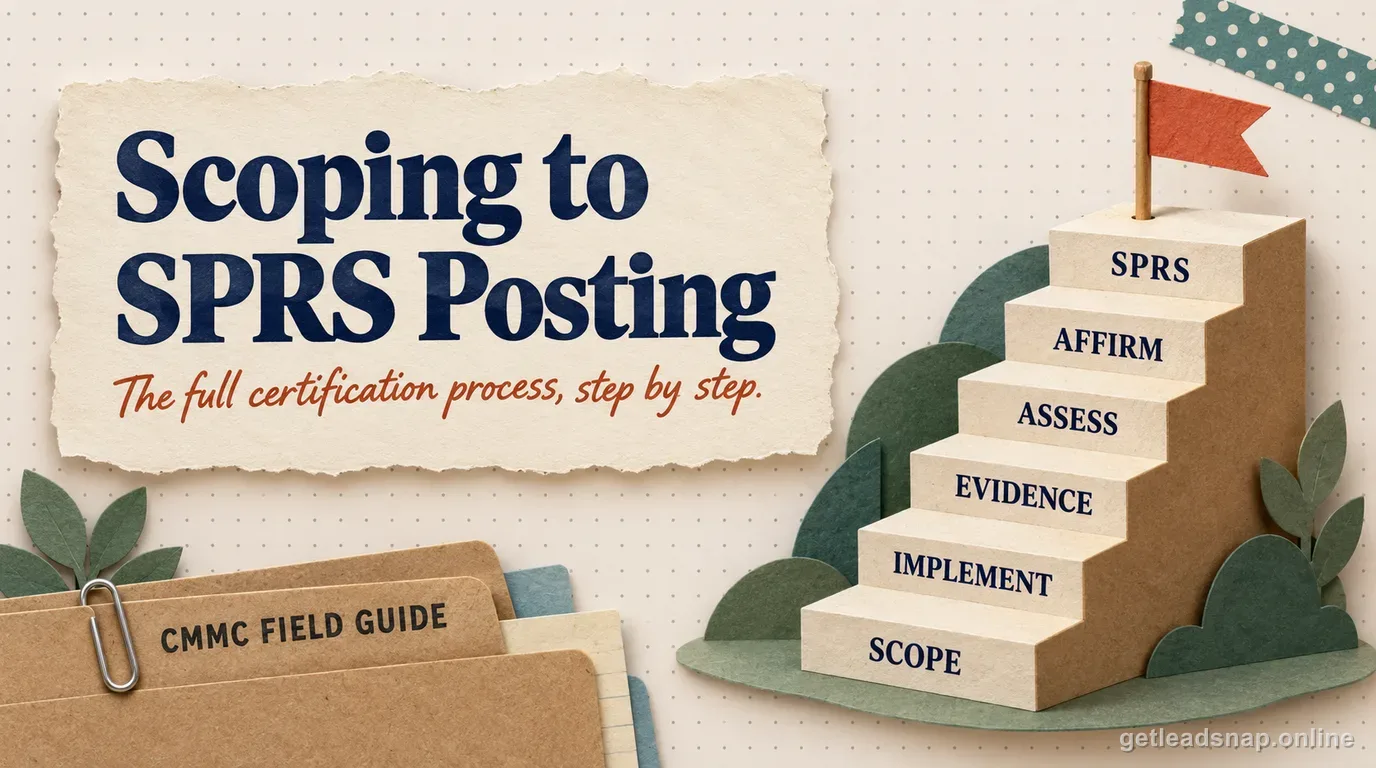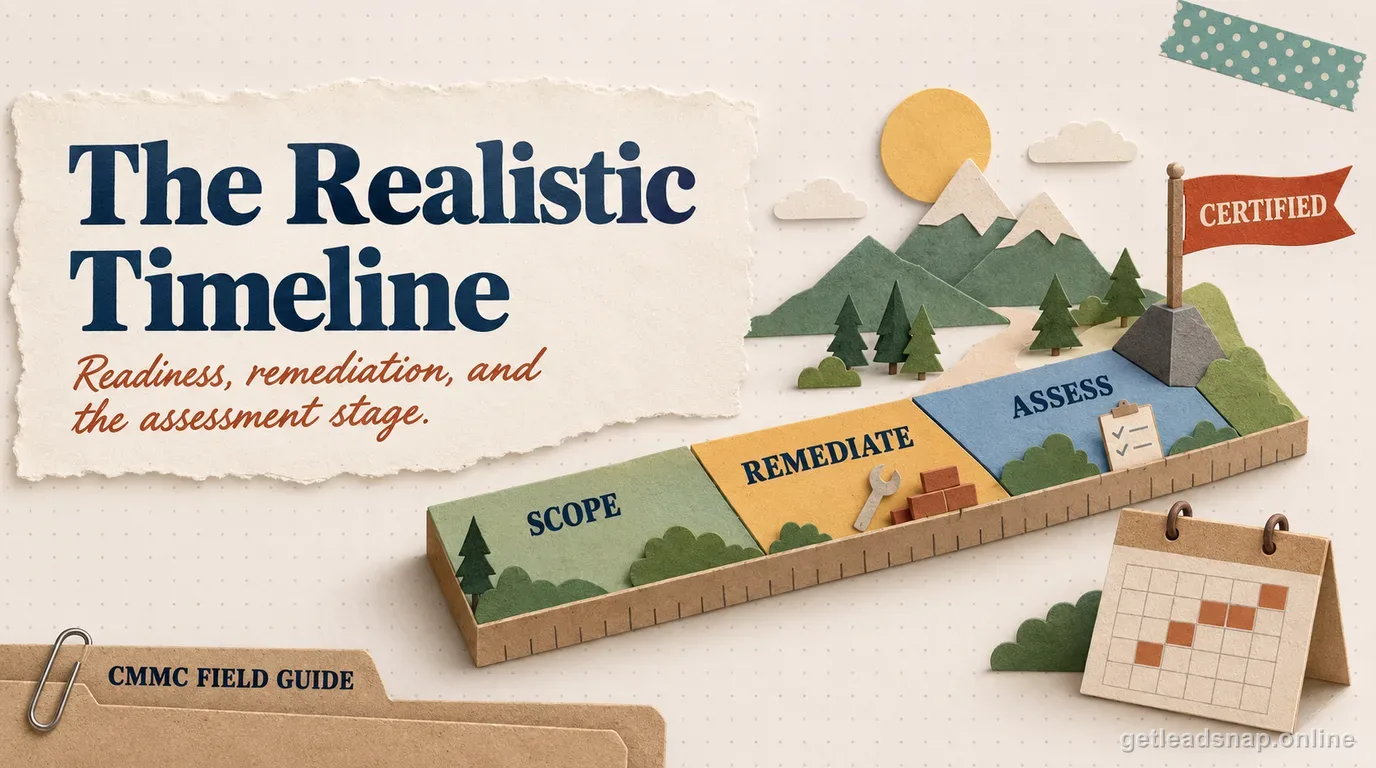
There is no single CMMC certification timeline. A mature, narrowly scoped Level 2 environment may prepare in a few months, while a broad environment with architecture, cloud, policy, and remediation work can take a year or longer before a formal assessment event.
Status note: reviewed September 4, 2026. Phase II is suspended, Phase I remains in force, and the Department of War's CMMC Reform Task Force review is still open. Re-check the official CMMC page before publication if this article is published after that date.
The rule in plain English
The timeline has at least five parts: scoping, gap analysis, remediation, evidence stabilization/readiness, and the applicable assessment/closeout process. Waiting for a C3PAO slot is only one possible delay.
As of September 4, 2026, mandatory Phase II third-party timing is suspended, so do not promise certification is required by the old November 10 date.
How to implement it without overbuilding
Build the schedule from unresolved gaps, not from a target ceremony date. Identify long-lead items such as cloud migration, enclave design, identity redesign, hardware replacement, provider changes, and process adoption.
Allow operating time for evidence to accumulate. A newly enabled control can be technically correct but harder to demonstrate as a stable process.
What evidence to keep
Keep a readiness plan with owners, dependencies, completion criteria, evidence dates, and assessment-scheduling assumptions.
Separate 'implemented' from 'validated' so the team knows which controls still need internal testing.
Where teams get into trouble
Teams underestimate remediation and overestimate how quickly documentation can become accurate after architecture changes. Another mistake is booking an assessment before scope is stable.
Small-contractor walkthrough
A company with mostly mature controls still needs to migrate a legacy file server, clean up identities, and collect several months of evidence. Those dependencies matter more to the schedule than the number of pages in the SSP or the duration of the assessor's on-site work.
- Stabilize scope.
- Identify long-lead remediation.
- Sequence dependencies.
- Allow evidence to mature.
In September 2026 there is no single official certification timeline
The July 13, 2026 Department announcement suspended Phase II and pending or future CMMC implementation milestones while leaving Phase I self-assessment requirements in place. A contractor should not plan around the old November 10, 2026 Phase II date or promise a mandatory third-party completion date from the superseded rollout schedule. Current timing starts with the contract requirement and active Department guidance.
Separate regulatory timing from readiness timing. An organization can estimate how long it needs to stabilize scope, remediate gaps, collect evidence, and become assessment-ready, but that is an internal project estimate rather than a government certification deadline. If a prime or business strategy requests a voluntary assessment during the suspension, confirm the current purpose and ecosystem availability before treating that date as an official milestone.
The readiness critical path is usually architecture and remediation
Build the schedule from dependencies. Long-lead items often include moving CUI into a defensible enclave, migrating cloud tenants, replacing unsupported endpoints, redesigning identity and privileged access, changing MSPs or external providers, deploying logging and backup controls, and rewriting workflows so users can follow the boundary. Documentation can proceed in parallel, but it should never describe a future-state design as though it already operates.
Add validation time after implementation. A control can be technically correct on day one but still lack stable evidence, trained owners, completed review cycles, or proof that exception handling works. Define implemented, operating, internally validated, and assessment-ready as different states so management does not mistake a purchase order or configuration ticket for readiness.
Use scenario schedules rather than one confident market number
Create three schedule scenarios. A mature narrow-scope environment may need mostly evidence cleanup and validation. A moderate-gap environment may require identity, endpoint, cloud, provider, and procedure work. A broad legacy environment can be dominated by architecture, migration, and change management. For each, list dependencies, owner, completion criteria, evidence, and any external scheduling assumptions.
Market articles publish wide timeline estimates, but those are not government commitments and many were written before the July 2026 suspension. Treat them as planning references only. Scope size, technical debt, procurement lead time, staffing, provider dependencies, and the organization's ability to change real user workflows are more useful predictors than the length of the SSP.
Review the schedule monthly by critical path, not percent complete. Ten easy policies completed do not offset one unresolved cloud migration that blocks the boundary. A useful status report names the blocker, decision owner, downstream tasks affected, and the evidence that will prove completion.
Last-mile depth check
For project governance, include a stop/go checkpoint before any assessment booking. Scope should be stable, major implementation work complete, owners trained, and evidence retrievable. Booking first and hoping remediation catches up later creates pressure to hide uncertainty and often produces rework when the assessment boundary changes.
A short working check
- ✓Stabilize scope.
- ✓Identify long-lead remediation.
- ✓Sequence dependencies.
- ✓Allow evidence to mature.
- ✓Run internal validation.
- ✓Re-check program status before locking dates.
Common questions
Can we become Level 2 ready in 30 days?
A very mature, narrow environment might close limited gaps quickly, but 30 days is not a realistic universal promise.
What takes longest?
Architecture changes, cloud migrations, remediation, identity redesign, provider dependencies, and evidence maturity often dominate.
Should we schedule a C3PAO before readiness?
You can discuss capacity, but a firm date before scope and major gaps are stable creates risk.
Has Phase II been canceled?
No. It is suspended and under review as of September 4, 2026.
Is November 10, 2026 still a mandatory Phase II deadline?
No. The Department suspended Phase II on July 13, 2026. Use current contract language and Department guidance instead of the old rollout date.
Official sources used for this guide
Open the primary source before making a contract-specific decision. Regulations and program implementation can change.