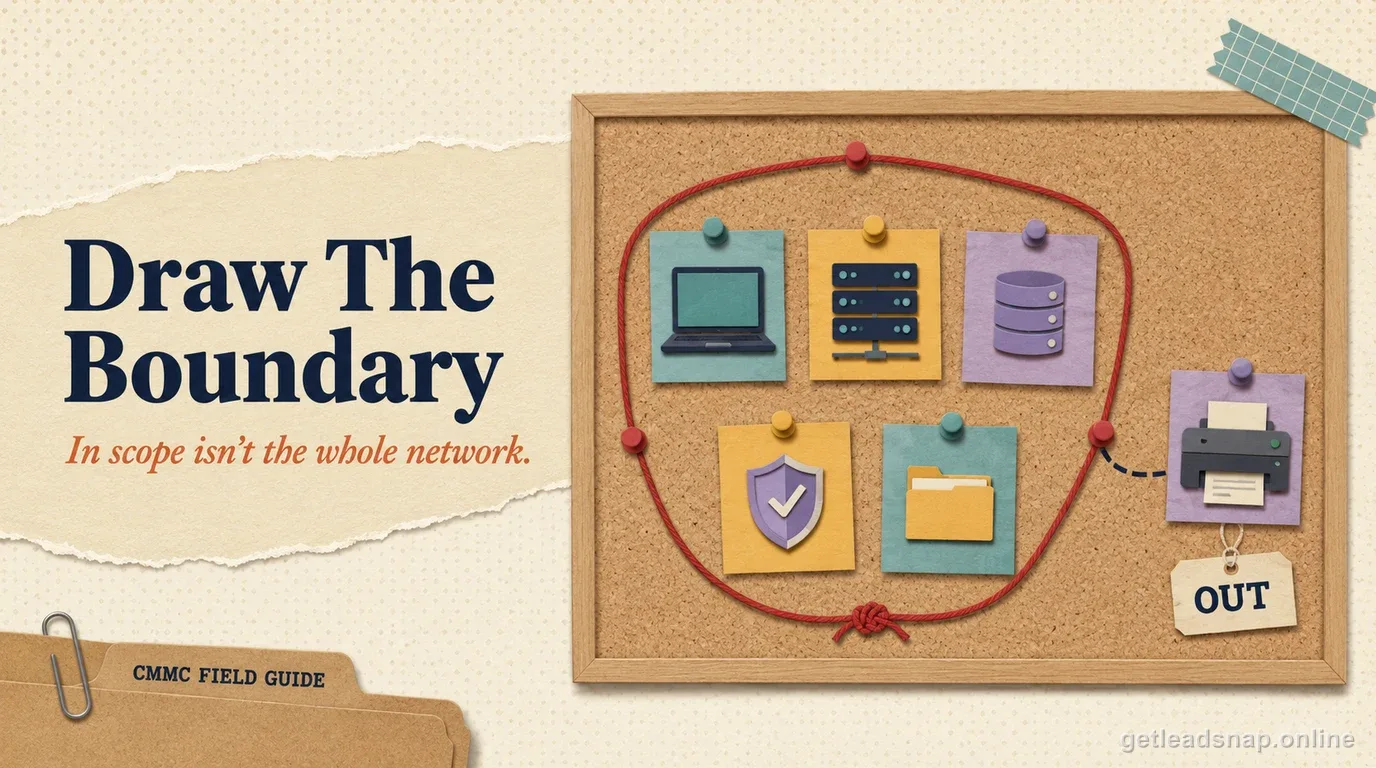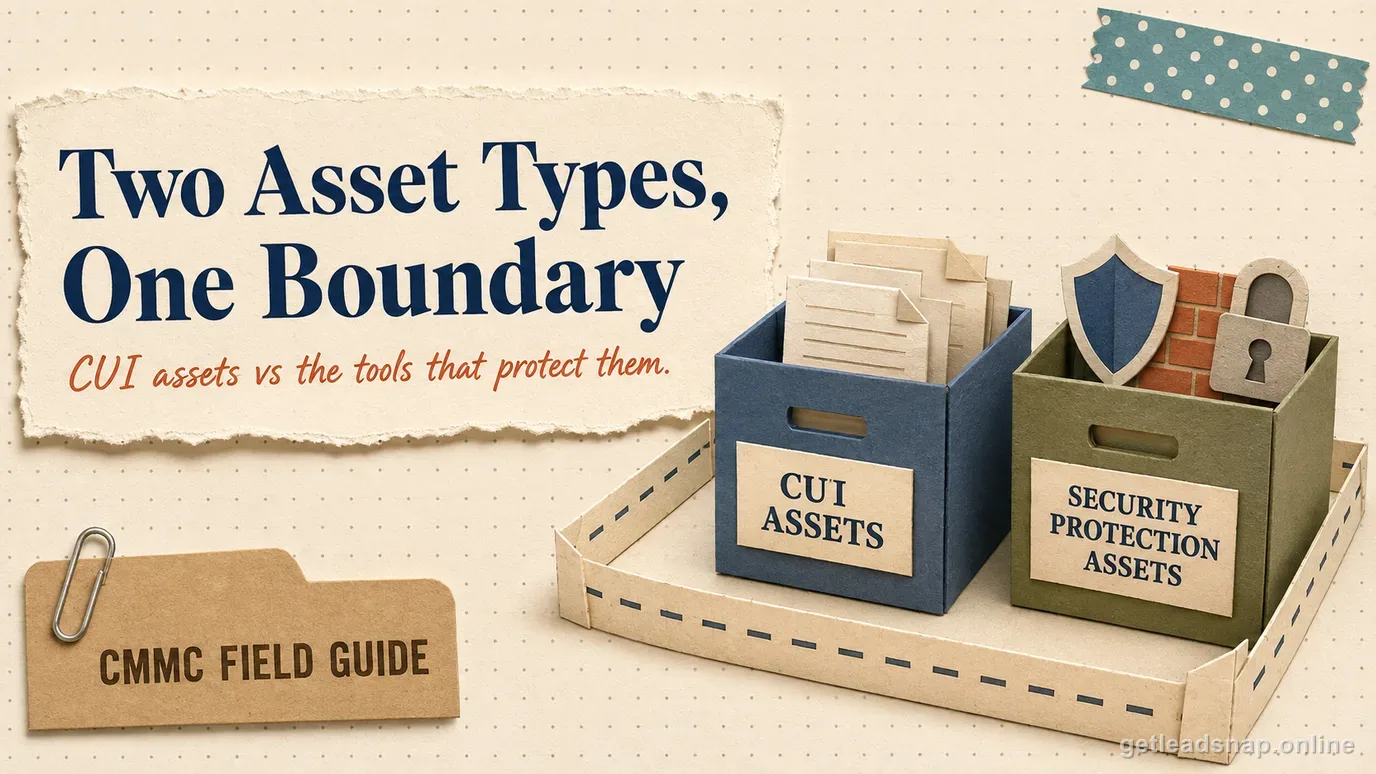
CUI assets and Security Protection Assets are easy to blur together because both can appear inside the Level 2 assessment scope. The difference is functional. A CUI asset processes, stores, or transmits the controlled information; a Security Protection Asset provides security functions or capabilities to the CMMC assessment scope. The second category can matter even when users never open a CUI file on it.
This distinction is useful because it forces teams to explain why identity, endpoint management, EDR, SIEM, firewall, backup administration, or privileged-access tooling matters. A vendor label is not enough. The asset inventory should describe the actual service provided to the CUI environment and the paths created by that service.
Start with function, not product category
Ask what the component does for the assessed environment. Does it authenticate users, enforce endpoint settings, detect malicious activity, collect audit logs, filter network traffic, scan vulnerabilities, manage encryption keys, or provide privileged administration? If so, it may be providing a security capability that needs explicit scoping treatment.
Do not classify every cybersecurity-branded product automatically. A security tool used only by an unrelated corporate environment may have no meaningful role in the CUI scope. Document the connection to the assessed system instead of deciding from the logo on the console.
Identity and endpoint management are common dependencies
A cloud identity provider may not store engineering drawings, but it can control who signs into the CUI enclave and how MFA or conditional access is enforced. An endpoint-management service may push hardening settings, certificates, or software to CUI workstations. Those are security functions with direct consequences for assessment claims.
For each service, record the tenant, administrative roles, privileged-access method, logs, configuration owner, and the CUI systems it protects. This turns a vague phrase such as 'Entra handles access' or 'RMM secures laptops' into an assessment-ready description.
Logging and detection tools deserve their own data-flow review
SIEM and EDR platforms can collect hostnames, usernames, command lines, file paths, alert content, or other telemetry from in-scope systems. That data may not be CUI itself in every case, but the platform can still be a critical protection dependency and may receive information sensitive to the security design.
Document where telemetry is stored, who can search it, how long it is retained, and whether the service is shared with other business units. The answer influences both scope and evidence: an assessor may need to see how logging requirements are implemented without giving broad access to unrelated corporate data.
Shared enterprise tools can widen the protection chain
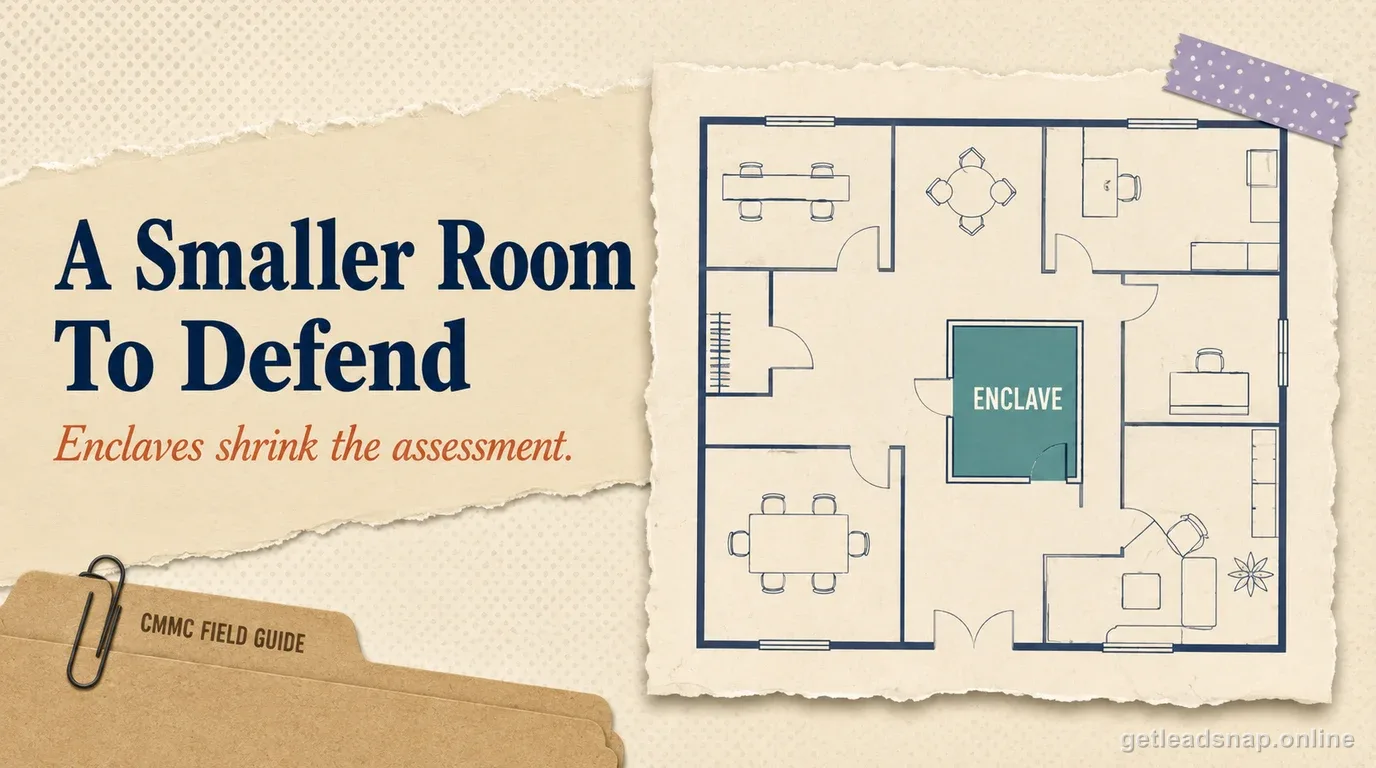
A company-wide firewall manager, EDR tenant, backup console, or identity platform can be efficient operationally, but it also means the CUI enclave depends on a service shared beyond the enclave. That does not automatically invalidate the design. It does mean the SSP should explain the partitioning, administrative boundaries, and which capabilities are relied upon for the assessed system.
Where practical, use dedicated groups, policies, tenants, or administrative roles for the CUI environment. Separation only helps when it creates a clear, enforceable boundary and reduces ambiguity about which settings and users affect the assessed system.
Build a responsibility matrix for each protection asset
For every Security Protection Asset, identify who configures it, who reviews it, who approves changes, where logs or evidence live, what privileged identities exist, and which NIST requirements rely on its capabilities. If an MSP operates the service, separate provider duties from contractor duties.
This matrix is valuable during evidence collection. Instead of asking the security team to 'prove logging,' the evidence index can point to the SIEM configuration, retention setting, alert sample, and review record owned by named people. The asset classification becomes operational rather than decorative.
Revisit classifications after architecture changes
A tool can change categories when its role changes. A corporate backup platform may become a CUI dependency after the enclave is added to its jobs. A new identity federation can turn an external service into part of the security-protection chain. A dedicated tool can also be retired or isolated so that it no longer affects the assessed environment.
Include Security Protection Assets in quarterly scope reconciliation. Compare provider changes, new integrations, privileged-access changes, and data-flow modifications against the SSP and inventory. Keeping the category current is much easier than explaining a stale asset map during an assessment.
A practical classification example
Consider an enclave with five engineering laptops, a cloud file repository, a corporate identity tenant, an EDR console, a shared SIEM, and a managed firewall. The laptops and repository are straightforward CUI Assets when they process or store CUI. The identity, EDR, SIEM, and firewall may matter because they provide authentication, endpoint protection, logging, or network protection to that environment.
The classification exercise should then ask how shared each security service is. If the SIEM receives logs from the whole company, document how enclave telemetry is identified and who can administer the platform. If the identity tenant is shared, document the groups, conditional-access policies, privileged roles, and separation relevant to enclave users.
The resulting inventory is not just a list of 'in-scope security tools.' Each row explains the capability, the CUI systems protected, the administrative path, evidence location, and owner. That detail lets an assessor understand why a component is included and what requirements depend on it.
When one service is replaced, update the dependency map before deleting the old row. The historical record matters because older evidence may still refer to the retired platform. Clear lifecycle dates prevent a reviewer from thinking two tools are simultaneously active.
Use the dependency map to test blast radius. If one shared identity or management platform fails or is compromised, which CUI assets lose protection or become administratively reachable? The answer helps prioritize evidence and resilience work. A Security Protection Asset can be important not because it contains the most sensitive data, but because many assessed controls depend on it functioning correctly.
A protection asset should have an owner who understands both its security function and its failure mode. If the identity service, endpoint platform, log collector, or firewall manager became unavailable or misconfigured, what CUI workflow would be affected and how would the organization notice? Adding that operational question to the asset record turns the category from an assessment label into something useful for resilience and change control.
Do not classify every enterprise security product as an SPA by brand category alone. Trace the function: does the service provide protection to the assessed environment, administer in-scope assets, receive security-protection data, or create a dependency used to satisfy a requirement? Record that rationale and revisit it when integrations change. Functional reasoning prevents both needless scope expansion and the opposite mistake of ignoring a shared platform that actually protects the CUI system.
Before you call the boundary done
- ✓Classify CUI and protection assets separately
- ✓Describe each security asset's actual function
- ✓Map privileged administration
- ✓Record where security telemetry is stored
Official sources used for this guide
Open the primary source before making a contract-specific decision. Regulations and program implementation can change.