Choosing a C3PAO is not the same as choosing a consultant. A C3PAO performs an authorized certification assessment; the contractor should verify authorization, independence, assessment-team credentials, scope assumptions, commercial terms, and conflict handling.
Status note: reviewed September 4, 2026. Phase II is suspended, Phase I remains in force, and the Department of War's CMMC Reform Task Force review is still open. Re-check the official CMMC page before publication if this article is published after that date.
The rule in plain English
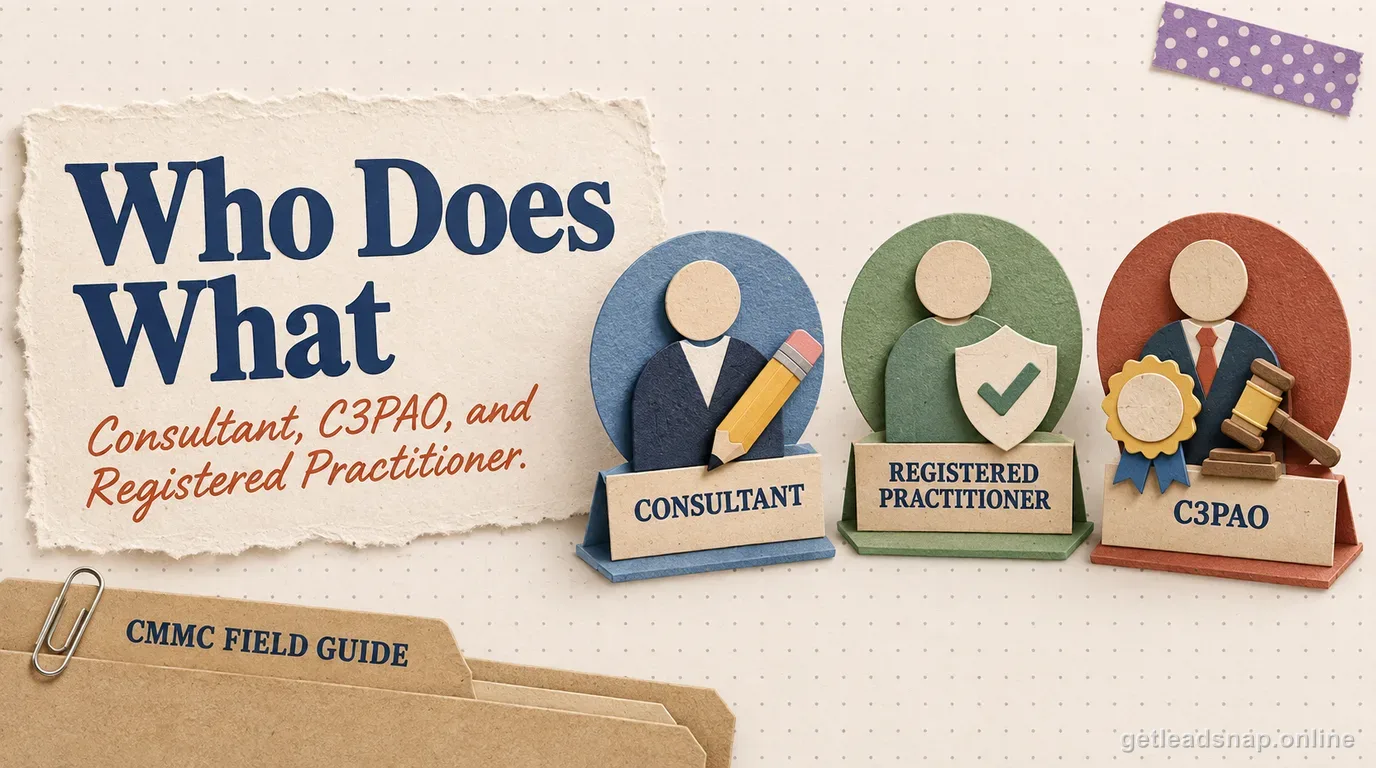
The Cyber AB describes C3PAOs as assessment organizations using certified personnel. Assessment independence matters: people who helped prepare the same organization can face restrictions on participating in the assessment team.
Phase II is suspended, but C3PAO assessments remain part of the operating ecosystem. A contractor considering a voluntary or customer-driven assessment should still verify the business reason and current program status.
How to implement it without overbuilding
Ask who will lead the assessment, how the team sizes the engagement, what pre-assessment information it expects, how remote/on-site work is handled, what is included in the fee, and how rescheduling or scope expansion affects price.
Do not ask the C3PAO to design the control implementation it will later assess. Keep advisory and assessment roles cleanly separated.
What evidence to keep
Keep authorization verification, proposal, scope assumptions, conflict disclosures, assessor names/roles, contract terms, and assessment plan.
Confirm that the legal entity and environment named in the engagement match the organization and information system seeking assessment.
Where teams get into trouble
Red flags include vague authorization status, promises of guaranteed certification, pressure to buy unrelated services, unclear evidence expectations, or pricing that hides foreseeable scope costs.
Small-contractor walkthrough
Two C3PAOs quote very different prices because one assumes a single enclave and the other includes multiple sites and travel. The contractor should normalize the proposals to the same boundary, personnel, evidence expectations, on-site work, and rescheduling terms before comparing price.
Cost and process estimates become reliable only after scope assumptions are written down. User count, locations, system count, remediation, cloud choices, internal labor, and provider dependencies can materially change the answer.
Separate what is required by the current program from optional readiness choices and future Phase II scenarios. That keeps commercial planning useful while the program is changing.
- Verify C3PAO status.
- Confirm assessor roles.
- Ask about independence/conflicts.
- Define assessment boundary.
Decisions to document before assessment
Before marking this topic ready, make four decisions explicit: verify c3pao status; confirm assessor roles; ask about independence/conflicts; and define assessment boundary. Assign an owner and an evidence location to each decision.
Manual deep review
The Cyber AB distinguishes assessment organizations from consultative organizations: C3PAOs conduct CMMC assessments using qualified personnel, while RPOs and RPs provide advisory services and do not conduct certified assessments. Verify the prospective C3PAO in the current Cyber AB ecosystem or marketplace and confirm the status authorizing the work. Do not rely only on a logo or sales deck.
Ask who will actually perform the assessment and whether those people understand an environment like yours—cloud-heavy, manufacturing/OT, multi-site, enclave, MSP-supported, or engineering-centric. Ask who leads, who performs quality review, and how team substitutions are handled. The brand matters less than the people who will examine evidence, interview personnel, and test systems.
Keep readiness advice and certification assessment roles cleanly separated under applicable independence rules. If an affiliate, related entity, or individual participated in readiness work, disclose the relationship and ask how potential conflicts are handled before signing. A serious assessment conversation focuses on scope, process, evidence logistics, and expectations rather than promises to design controls during the event.
Give every shortlisted C3PAO the same fact sheet: legal entity, sites, proposed assessed system or CMMC UID, users, CUI assets, security protection assets, external providers, specialized assets, architecture, and known edge cases. Require each quote to state its assumptions. A low quote for a narrow enclave is not comparable with one that assumes the whole enterprise.
Clarify what the fee includes: planning, remote/on-site days, travel, evidence portal, added assessors, quality review, permitted re-evaluation handling, conditional closeout, rescheduling, scope changes, and cancellation. Phase II remains suspended as of September 5, 2026, so confirm the current contract or business reason for the assessment rather than scheduling solely against the old November 10 milestone.
Normalize proposals before scoring the C3PAO
Create a comparison sheet with the same fields for every bidder: assumed asset count, sites, cloud/on-prem mix, specialized assets, external providers, remote versus on-site days, named assessment personnel, travel, evidence portal, quality review, re-evaluation handling, POA&M closeout pricing, cancellation, and scope-change rates. A headline fee is meaningless when the underlying assumptions differ.
Score assessment-process quality separately from price. Ask how the team maps evidence to objectives, handles technical tests, protects sensitive evidence, resolves factual disagreements, documents scope changes, and communicates potential findings. The response should be specific enough to understand the process without promising that the organization will pass.
Protect assessment evidence during the engagement
Before uploading network diagrams, vulnerability data, screenshots, configurations, or other sensitive artifacts, understand the C3PAO's evidence-handling process, access controls, retention, transfer method, and destruction/return practices. Provide only the evidence needed to demonstrate objectives and avoid placing passwords, secrets, or unnecessary CUI in an assessment portal.
Name an internal evidence coordinator who controls uploads and keeps a manifest of what was provided. That makes it easier to reconcile the assessor's artifact list, preserve the required assessment record, and prevent duplicate or outdated versions from circulating.
Use current suspension status in the buying decision
Because Phase II remains suspended as of September 5, 2026, document why the organization is pursuing a C3PAO event now: a current contractual requirement, prime/customer demand, strategic market access, or another defensible business reason. Do not let a provider sell urgency based solely on the superseded November 10 phase date.
Readiness work can continue even if formal assessment timing moves. Scope stability, remediation, and evidence quality reduce the risk of wasting an assessment slot whenever the business eventually needs one.
A short working check
- ✓Verify C3PAO status.
- ✓Confirm assessor roles.
- ✓Ask about independence/conflicts.
- ✓Define assessment boundary.
- ✓Clarify fee inclusions/travel.
- ✓Understand appeals and rescheduling.
Common questions
Can our readiness consultant also assess us?
Independence rules can restrict personnel who helped prepare the organization from participating on the assessment. Keep roles separated.
Should we pick the cheapest C3PAO?
Price matters, but scope assumptions, competence, scheduling, independence, and process clarity matter too.
Can a C3PAO guarantee a pass?
A guaranteed outcome is a serious warning sign. The assessment must evaluate evidence against the program requirements.
Does Phase II suspension make C3PAOs irrelevant?
No. The ecosystem remains operational, but mandatory Phase II timing is under review.
Official sources used for this guide
Open the primary source before making a contract-specific decision. Regulations and program implementation can change.