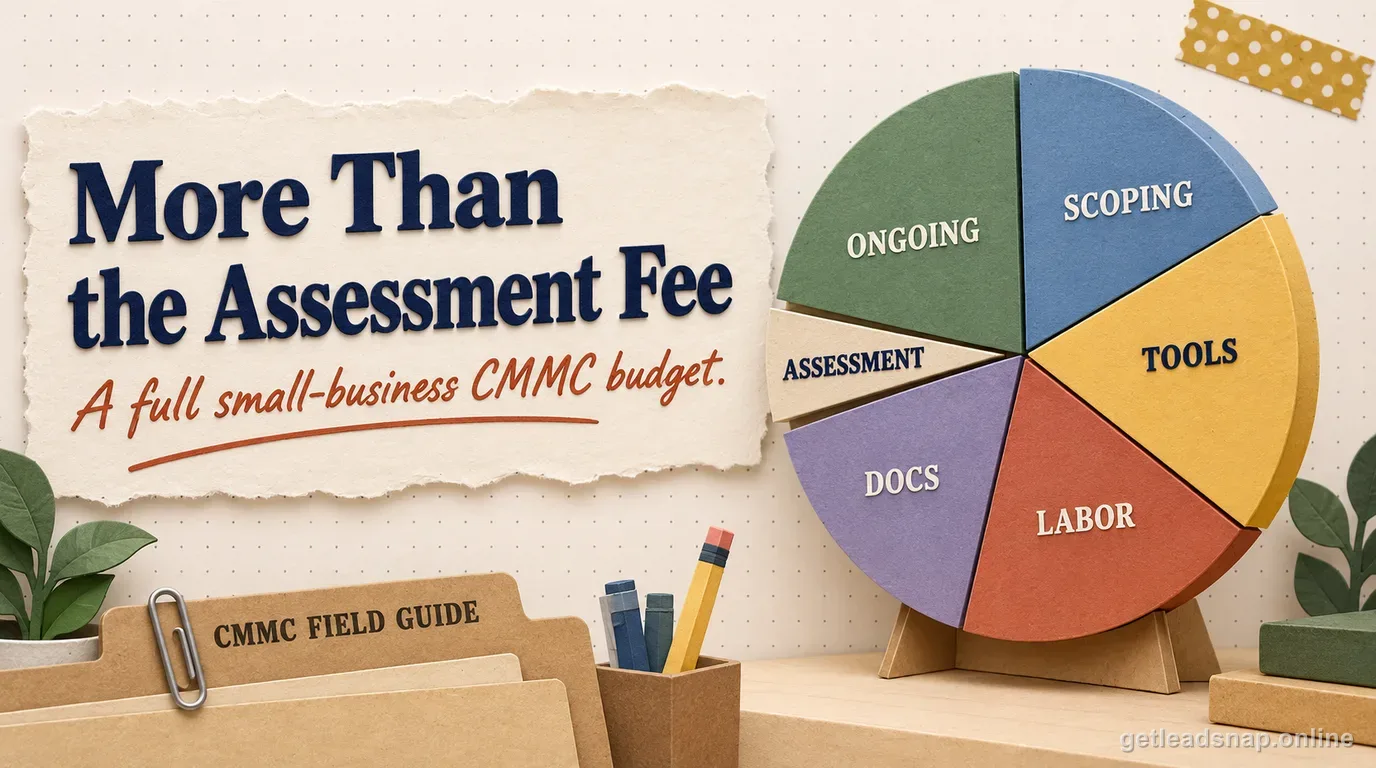
For small businesses, the assessment invoice is often not the biggest CMMC cost. A practical budget needs separate lines for remediation, licenses, managed services, hardware, internal staff time, documentation, training, contract review when needed, and ongoing operations.
Status note: reviewed September 4, 2026. Phase II is suspended, Phase I remains in force, and the Department of War's CMMC Reform Task Force review is still open. Re-check the official CMMC page before publication if this article is published after that date.
The rule in plain English
Market estimates vary widely and are not government price lists. The first budgeting question is scope: every additional user, endpoint, site, application, or provider can increase implementation and evidence work.
Create three views: one-time remediation, first-year recurring cost, and three-year run cost. That prevents a low entry quote from hiding ongoing operational expense.
How to implement it without overbuilding
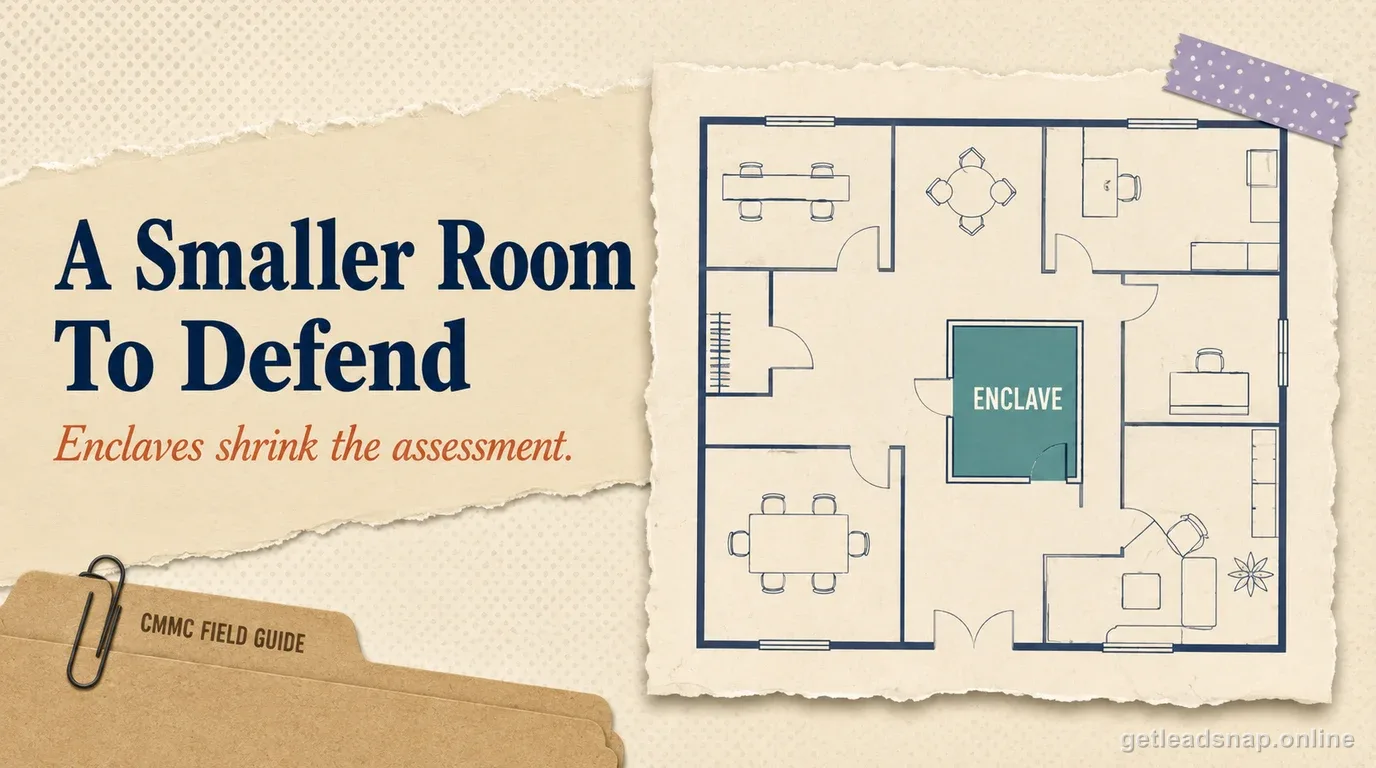
Model a base case using the current environment, then a containment case that narrows CUI to a defensible enclave where business operations allow it.
Include contingency for unsupported equipment, unmanaged shop-floor assets, stale accounts, weak backups, or cloud services that must be replaced or reconfigured.
What evidence to keep
Keep assumptions, quotes, license counts, internal-labor estimates, remediation priorities, and scope dependencies with the budget.
Label market data as estimates and refresh vendor pricing instead of hard-coding it into policy.
Where teams get into trouble
A common mistake is counting only cash purchases and ignoring owner, IT, or engineering time. Another is assuming an enclave saves money without pricing the operational friction it creates.
Small-contractor walkthrough
An owner budgets only for a future C3PAO fee and later discovers recurring government-cloud licenses, managed monitoring, backup changes, hardware replacements, and staff time. A three-year budget exposes those recurring costs before they become a contract-margin surprise.
- Define budget scope.
- Separate one-time/recurring costs.
- Price internal labor.
- Compare broad vs. enclave scope.
Budget by workstream, not by one assessment fee
A CMMC budget should separate architecture and remediation, recurring security operations, internal labor, outside advisory work, cloud and software subscriptions, hardware, provider changes, evidence/program management, and any assessment-related spend. The formal assessment fee is only one possible line item, and during the Phase II suspension its timing is especially uncertain. A business that budgets only for an assessor can underestimate the durable cost of protecting CUI.
Start from scope. Count CUI users, endpoints, servers, facilities, cloud tenants, applications, network segments, external providers, specialized assets, support paths, backups, and security-protection systems. Then identify which already fit the intended design and which require changes. A ten-user enclave can be expensive if CUI currently spreads across email, ERP, collaboration, engineering, and support workflows.
Separate one-time, recurring, and internal labor costs
One-time costs can include migration, network redesign, consulting, new endpoints, tenant setup, documentation, and remediation. Recurring costs can include government-cloud licensing, managed security, vulnerability management, backups, logging, training, evidence reviews, and provider fees. Internal costs include owner, contracts, HR, engineering, IT, facilities, and management time spent changing workflows and maintaining evidence.
Include operational friction. An enclave may reduce technical scope but increase user switching, file-transfer steps, duplicate licenses, support complexity, or engineering delays. A broad enterprise scope may simplify workflows but pull many more assets and providers into evidence and security operations. Compare architectures over several years instead of selecting the option with the lowest first invoice.
Use market estimates only after matching their assumptions
Third-party cost estimates can help management understand possible ranges, but they are not government price lists. Record the source, date, company-size assumption, level, scope, and what is included. A low estimate that excludes remediation, internal labor, recurring licenses, or provider changes is not directly comparable with a full first-year estimate.
Run sensitivity analysis on the variables most likely to move: CUI-user count, locations, legacy systems, provider count, cloud choice, remediation severity, internal labor, and future assessment structure. This shows management which business decisions change the economics instead of pretending one industry-average number applies to every contractor.
During the current reform review, separate durable safeguarding investments from spend tied only to a future certification milestone. Accurate inventory, access control, MFA, logging, backups, vulnerability management, incident response, and evidence discipline remain useful even if the future Phase II structure changes. A premium paid solely to meet the old November 10 date does not follow the current official status.
Last-mile depth check
Tie the budget to contract margin. For each expected DoD opportunity, show which security costs are shared across the company, which are incremental to that program, and which recur after award. This helps management distinguish a durable enterprise capability from a one-off bid cost and prevents CMMC work from silently eroding program profitability.
A short working check
- ✓Define budget scope.
- ✓Separate one-time/recurring costs.
- ✓Price internal labor.
- ✓Compare broad vs. enclave scope.
- ✓Include evidence/operations work.
- ✓Add contingency for legacy systems.
Common questions
How much contingency should we add?
There is no universal percentage. Base it on uncertainty in the asset inventory, legacy environment, and provider dependencies.
Is an enclave always cheaper?
No. It can reduce scope, but migration, workflow friction, duplicate tooling, and user support can offset savings.
Should we budget only the C3PAO fee?
No. Treat assessment as one line among remediation, operations, and internal effort.
Does Phase II suspension remove NIST budget needs?
No. DFARS 252.204-7012 obligations remain for covered contracts.
Should we budget a C3PAO fee this year?
Treat assessment timing as a scenario during the current Phase II suspension unless a current contract or business decision creates a specific need; keep funding durable safeguarding work.
Official sources used for this guide
Open the primary source before making a contract-specific decision. Regulations and program implementation can change.