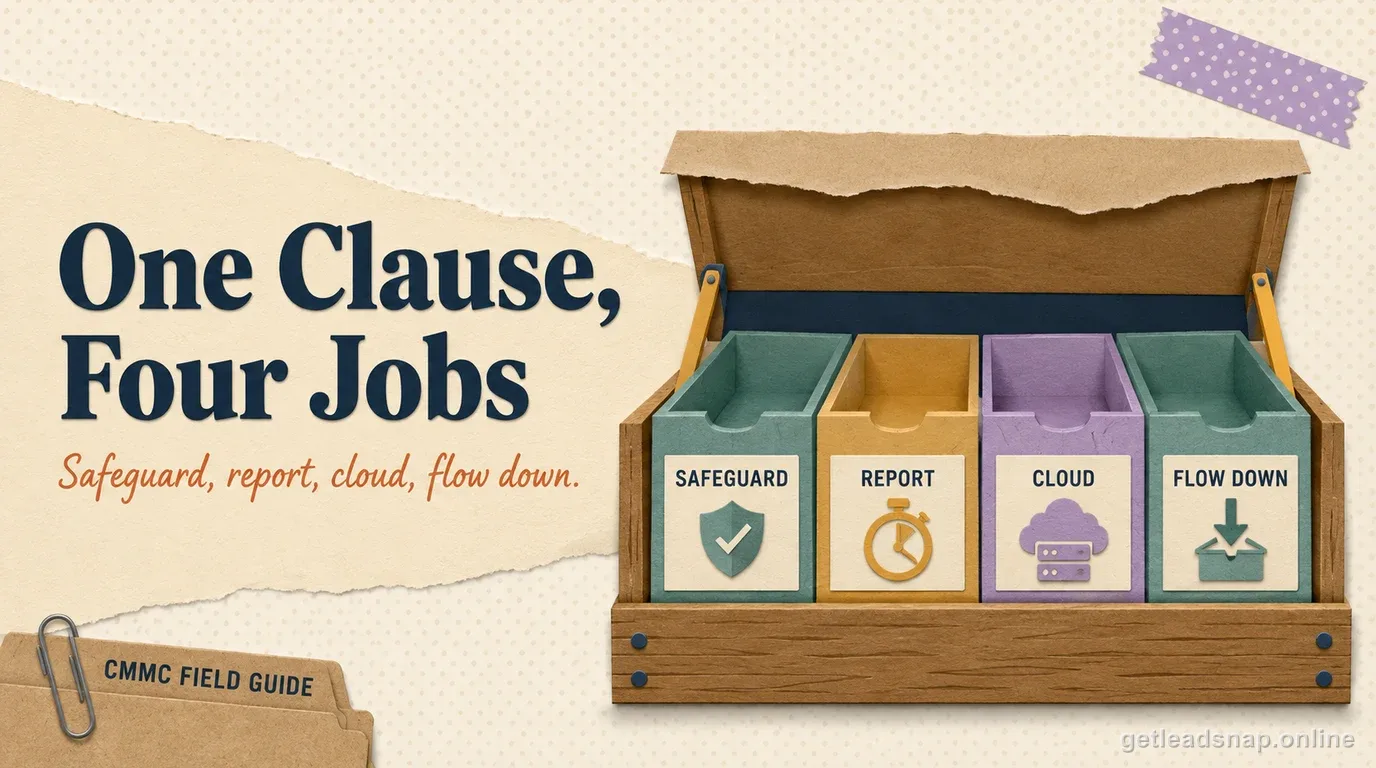
Subcontractor flowdown under DFARS 252.204-7012 is not just a clause-insertion task. The prime needs to know whether the subcontractor will receive covered defense information or provide work that triggers the flowdown, which system will handle the information, how incidents will be escalated, and how access and data will be closed out at the end of the relationship.
A purchase order can contain perfect language while the actual project shares CUI through an unapproved email account. The operating process must connect contracts, program management, security, and supplier management before the first file is sent.
For each subcontract, identify the information the supplier needs to receive or create. Record whether it includes covered defense information, the contract or program it supports, and the approved transfer method. Do not flow security decisions from the supplier's industry or size alone.
Classify the information before supplier onboarding
If the information classification is unclear, resolve the question before sharing data. Procurement should not have to guess whether a drawing or technical package carries covered information after the subcontractor already has it.
Determine clause applicability from the actual subcontract
Review the prime contract and the subcontract scope to determine which flowdown requirements apply. Consider COTS exceptions and other acquisition-specific treatment where relevant. Avoid two extremes: omitting the clause because the supplier looks commercial, or inserting every cyber clause in every purchase order with no analysis.
Keep a short flowdown decision record with the subcontract number, information type, work performed, clause basis, reviewer, and date. That record helps later modifications and supplier changes.
Know which subcontractor system will receive the data
Ask the supplier to identify the environment that will process, store, or transmit the information. Capture a system name or scope description, responsible security contact, approved transfer path, and any required assessment or status information appropriate to the contract.
You do not need the supplier's entire security program for this decision. It is to establish enough visibility to know that the data will not be routed into an unrelated or unmanaged environment and to support the prime's own contract administration.
Make incident escalation faster than the prime's reporting clock
A subcontractor can discover an incident before the prime knows anything is wrong. If the prime may have a 72-hour reporting obligation, the subcontract should require immediate or suitably rapid escalation, define after-hours contacts, and specify the minimum facts the supplier should provide without delaying notification for perfect certainty.
Test the contact path at onboarding and periodically thereafter. An outdated phone number or shared mailbox that nobody watches at night can consume the prime's response time even when the technical detection worked.
Control shared repositories and collaboration spaces
Know where the supplier will receive files and how access is granted. Prefer approved portals, managed collaboration spaces, or other controlled transfer methods over ad hoc personal email or consumer file sharing. Use named accounts and remove access when people leave the project.
Review repository membership on a cadence appropriate to the work. Supplier personnel change, subcontract teams expand, and temporary accounts become permanent. Access review is a practical way to keep the flowdown relationship aligned with actual performance.
Close the data lifecycle when the subcontract ends
At closeout, confirm what data must be returned, retained, or destroyed under the contract and applicable requirements. Revoke shared access, close external collaboration spaces, disable integration accounts, and retain the evidence showing how the disposition was handled.
Also archive the supplier incident contacts, representations, flowdown decision, and system information with the subcontract file. The supplier may return on a later project, but the old record should not be assumed current without a new review.
A supplier onboarding record that joins contracts and security
Create one page per subcontractor relationship. Include subcontract number, prime-contract reference, description of work, information shared, flowdown decision, supplier system name or description, approved transfer method, supplier security contact, after-hours incident contact, relevant representations or assessment data, and the date of the last review.
Program management should approve the information-sharing description because it knows what the supplier actually needs. Contracts should approve the flowdown basis. Security should approve the transfer method and system information. This three-way ownership is more reliable than asking procurement alone to answer technical questions.
During performance, record material changes: new supplier location, new cloud platform, acquisition, new sub-tier provider, changed data type, or expanded statement of work. Any of these can alter the original analysis. Make the supplier responsible for notifying the prime of relevant changes through contract language where appropriate.
At closeout, mark the relationship inactive only after access and data disposition are addressed. Keep enough history to show what information was shared and under what controls. A future subcontract with the same supplier should start with a fresh review, not with an automatic copy of the old approval.
Tier the diligence to the information and access involved. A supplier receiving a limited technical package through a controlled portal may need a different evidence set from an MSP with privileged access to the CUI enclave. Risk-based depth keeps the process practical while preserving the essentials: clause applicability, receiving system, safeguarding responsibility, incident escalation, and data disposition. The objective is visibility proportional to the subcontract's real security role, not a giant questionnaire for every vendor.
Schedule periodic supplier reviews for relationships that continue over multiple years. Confirm the receiving system, incident contacts, transfer path, relevant assessment or representation information, sub-tier changes, and active personnel access. The review can be brief when nothing changed, but it prevents a three-year subcontract from operating indefinitely on onboarding facts that became stale after the first month.
Supplier offboarding should be coordinated with program staff so the prime does not revoke access before required deliverables or records are returned. Use a checklist that sequences final data transfer, confirmation of retention or destruction obligations, access removal, shared-space closure, and evidence archival. Good closeout protects both security and contract performance; doing the steps out of order can create an avoidable operational problem.
Treat material supplier changes as a new flowdown review trigger. A new sub-tier provider, different receiving system, changed cloud platform, acquisition, expanded statement of work, or new data type can invalidate the assumptions recorded at onboarding even when the subcontract number stays the same. Require notification of relevant changes where appropriate and update the supplier record before the new path begins handling covered information.
Keep the validation proportional to what the subcontractor actually receives and does. A supplier handling only ordinary commercial information should not be forced through the same evidence request as a subcontractor receiving CUI, while a CUI-bearing work package needs a documented path from the prime's flowdown decision to the supplier's applicable clauses, receiving system, reporting contacts, and handling instructions. That traceability is more useful than a generic annual questionnaire sent to every vendor.
A short working check
- ✓Classify information before sending it
- ✓Determine whether the flowdown condition applies
- ✓Identify the subcontractor system receiving data
- ✓Define incident escalation times and contacts
- ✓Control shared repositories and access
- ✓Verify data return/destruction at closeout
- ✓Include supplier data-return or destruction closeout
One question worth clearing up
Is adding the clause to a subcontract enough?
It is necessary when the flowdown conditions apply, but operational risk also requires knowing where the data goes and whether incident and safeguarding responsibilities can be performed.
Official sources used for this guide
Open the primary source before making a contract-specific decision. Regulations and program implementation can change.