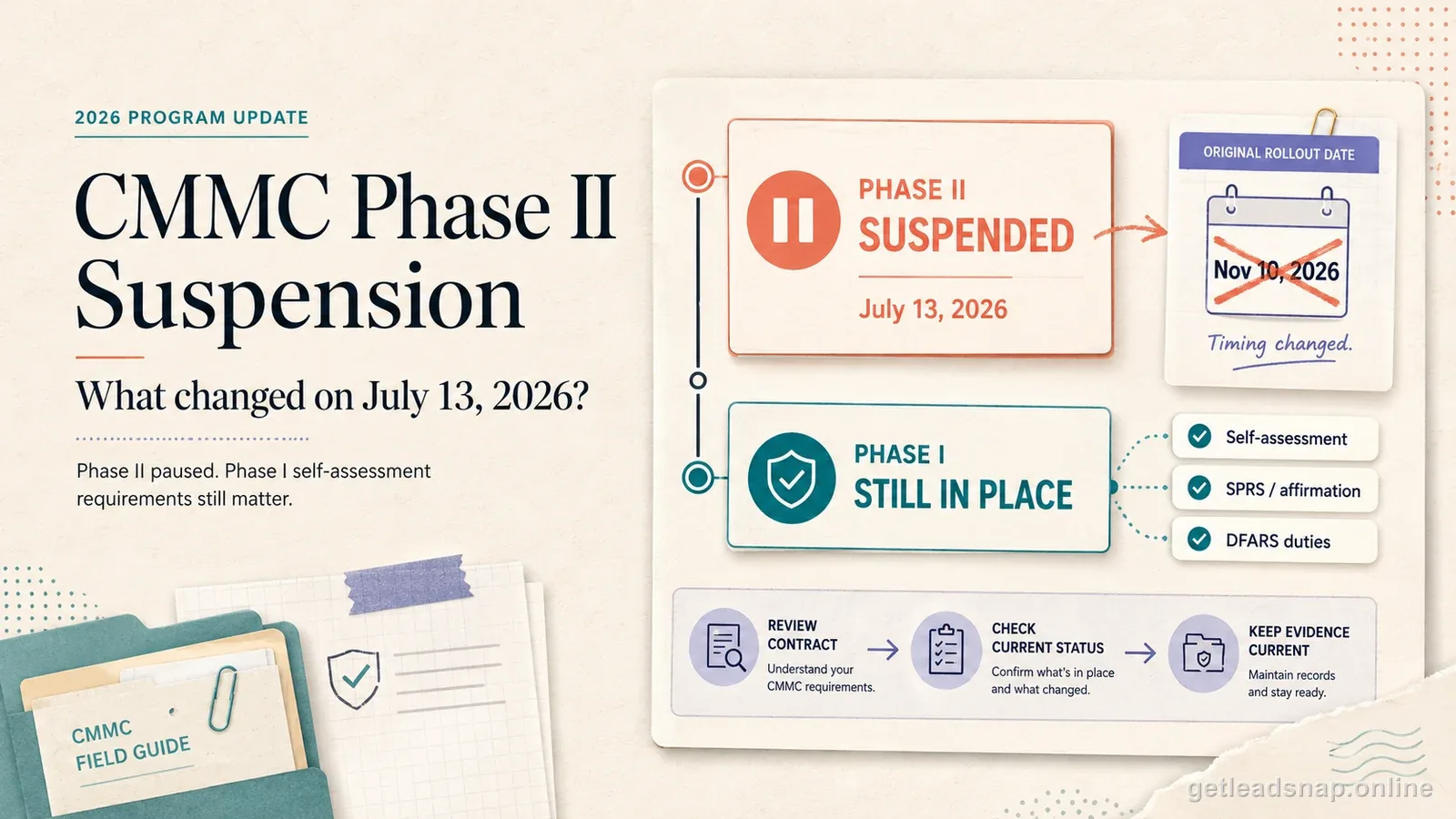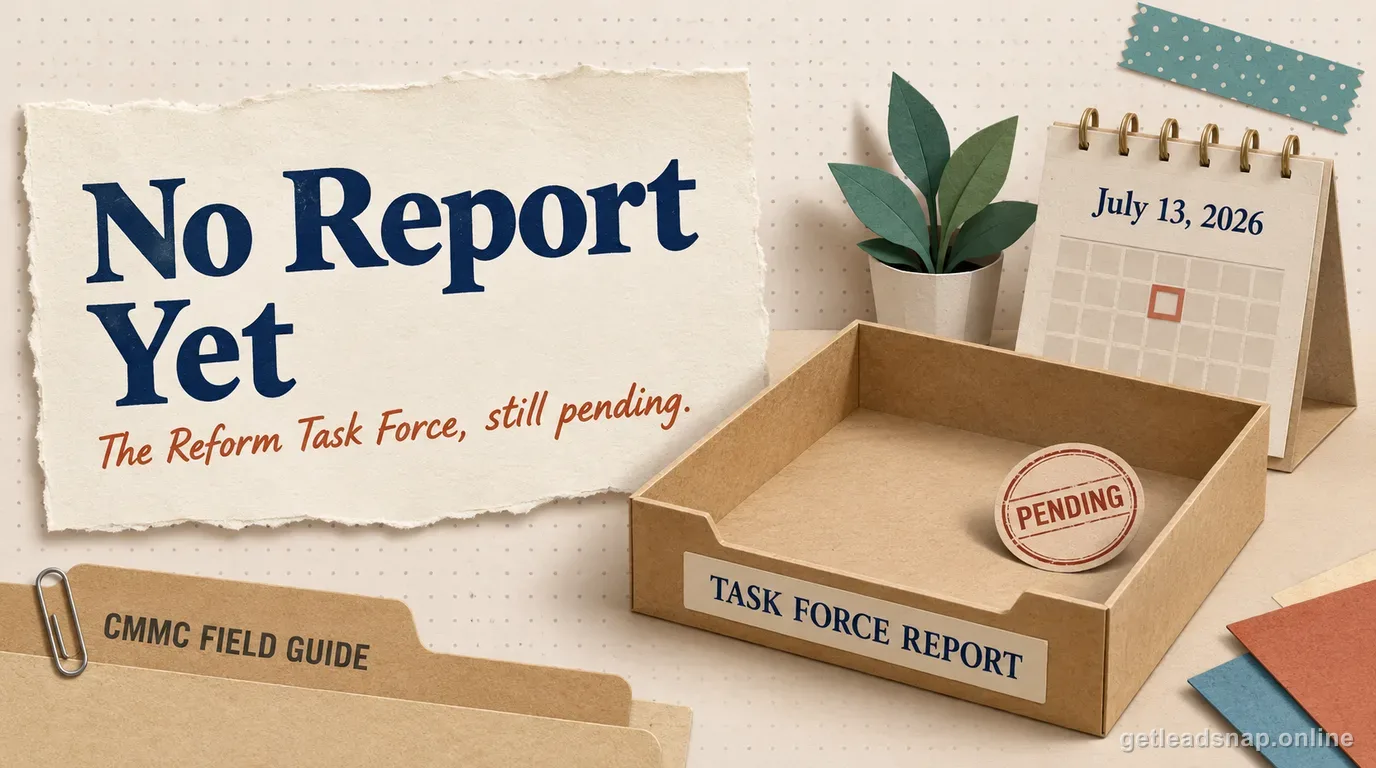
The Department of War created a CMMC Reform Task Force when it suspended Phase II on July 13, 2026. The task force was directed to conduct a top-to-bottom review and deliver recommendations to the Department CIO within 60 days; as of September 4, 2026, the official CMMC pages reviewed for this article do not show a final task-force report.
Status note: reviewed September 4, 2026. Phase II is suspended, Phase I remains in force, and the Department of War's CMMC Reform Task Force review is still open. Re-check the official CMMC page before publication if this article is published after that date.
The rule in plain English
The suspension announcement says the review will use industry feedback and focus on scalable security measures, barriers for small and nontraditional businesses, and alignment with the Acquisition Transformation System.
That mandate creates possible changes to certification cadence, assessment scope, burden, or implementation structure—but those are scenarios, not adopted requirements, until the Department publishes an authoritative action.
How to implement it without overbuilding
For contractors, preserve the parts that remain clear: protect covered defense information under DFARS 252.204-7012, maintain Rev. 2 implementation where contractually required, and meet active Phase I obligations.
Treat new spending that depends only on a specific future Phase II structure as a scenario decision rather than a certainty.
What evidence to keep
Keep a dated decision log separating current obligations from investments based on possible reform. Link every 'must' to an active source.
Immediately before publication, re-check the official CMMC main page, resources page, and Department release feed for the report or an implementing memo.
Where teams get into trouble
The main editorial error is turning a policy review into a prediction presented as fact. Another is saying Phase II was canceled; the primary announcement says suspended.
What the July 13 suspension actually says
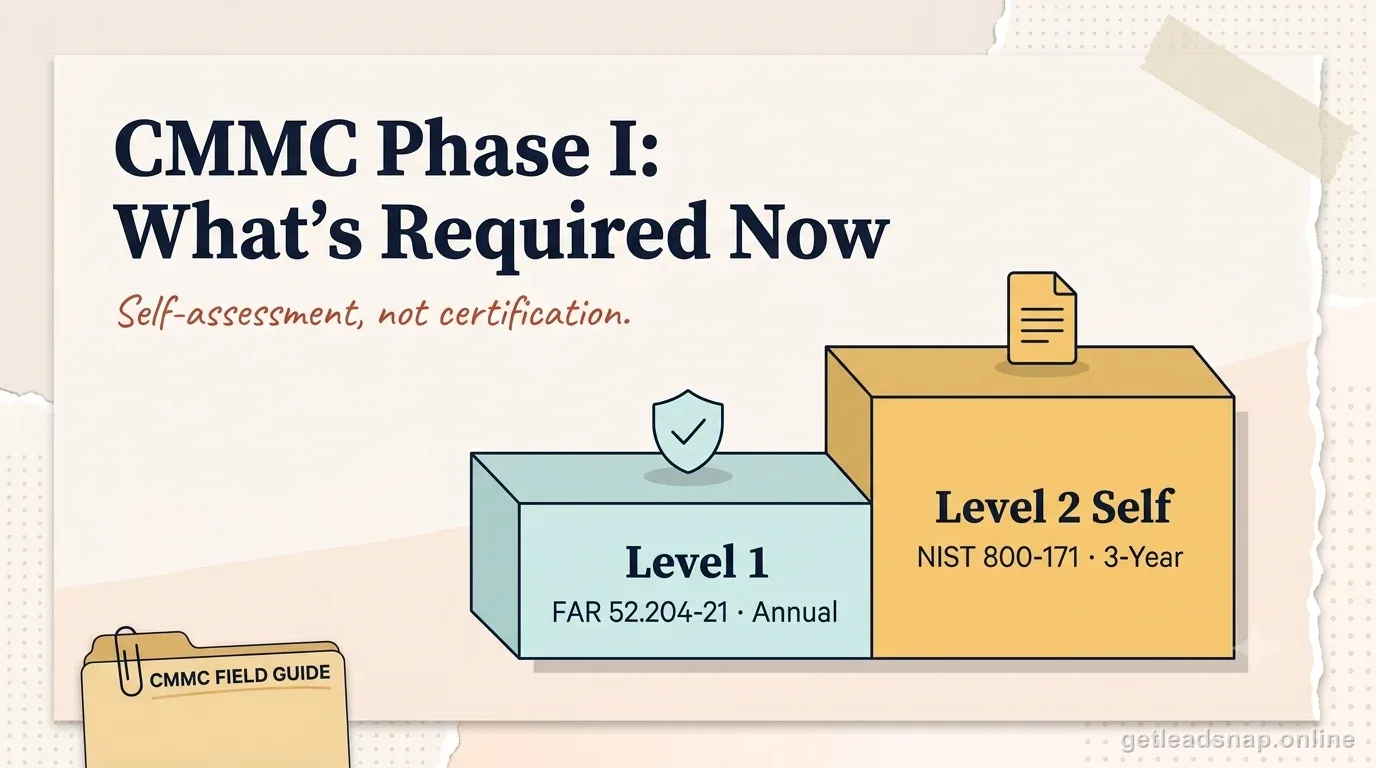
The Department's July 13, 2026 release does three things that matter operationally. It suspends the transition to Phase II, says pending and future CMMC implementation milestones across Department solicitations and contracts are suspended, and states that Phase I self-assessment requirements remain in place. It also says cybersecurity compliance will continue during the interim through NIST SP 800-171 Rev. 2 self-assessments and select government-led assessments.
The same release establishes the CMMC Reform Task Force and directs it to deliver a final report to the Department CIO within 60 days. That is an instruction to produce recommendations, not itself a new acquisition rule. Until the Department publishes the report and any implementing action, contractors should distinguish the known interim state from speculation about what the final redesign may contain.
- Known now: Phase II transition is suspended.
- Known now: Phase I self-assessment obligations remain.
- Known now: DFARS 252.204-7012 safeguarding remains contractually required.
- Not yet known: the final structure, timing, or scope of a reworked Phase II.
What to watch when the task-force report appears
The useful questions are narrower than 'Is CMMC dead?' Check whether the report recommends changes to which contracts require third-party assessment, the assessment cadence, scoping rules, small-business treatment, reciprocity, evidence expectations, or the relationship between CMMC and existing NIST/DFARS assessments. Then look for the legal or acquisition mechanism that turns a recommendation into something contractors must actually follow.
Do not update operational guidance from a headline alone. A task-force report can recommend changes without immediately changing 32 CFR part 170, DFARS clauses, contract terms, or the current Rev. 2 baseline. The publishing workflow for this site should therefore record both the date the report appears and the date any implementing rule, deviation, memo, or solicitation instruction becomes effective.
A small-contractor decision rule during the review
Keep projects that solve present contractual obligations and real security weaknesses moving. Pause or scenario-model projects whose only justification is a specific future certification milestone that is currently suspended. For example, fixing uncontrolled admin access or stale backups remains valuable; paying a premium solely to hit the old November 10 Phase II date does not follow the current official status.
Maintain a one-page decision log with four columns: current source, present obligation, planned action, and reform dependency. When the task-force output arrives, the company can re-baseline the projects that actually depend on reform instead of reopening the entire NIST SP 800-171 program.
How to update contracts, budgets, and published guidance when new reform output lands
Use a two-step verification process. First determine whether the new document is only a recommendation, policy statement, acquisition direction, class deviation, proposed rule, final rule, or contract amendment. Second determine the effective date and which solicitations or existing contracts it reaches. A reform report can be important without immediately changing the clause language that governs a particular contractor.
For the site, revise the 'as of' sentence first, then audit every article that contains a Phase II date, certification-path assumption, C3PAO timing claim, or Rev. 3 transition statement. For the contractor, update the contract-to-system matrix and budget scenario only after the implementing source is clear. This keeps fast-moving program news from producing inconsistent pages or contradictory internal decisions.
- Classify the new document by legal/acquisition effect.
- Record publication date, effective date, and affected contract population.
- Update time-sensitive articles through one central status checklist.
- Preserve the previous status note so readers can see what changed.
Pre-build the source-change checklist for reform publication day
List every site page, sales statement, budget assumption, supplier notice, and project milestone that depends on Phase II timing or assessment structure. When the reform task force or Department publishes authoritative output, classify whether it is a recommendation, memo, rule, deviation, or contract action before changing those materials.
This lets the organization update quickly without treating a policy recommendation as immediately binding contract language.
A short working check
- ✓Re-check official pages before publication.
- ✓Keep Phase I obligations current.
- ✓Continue Rev. 2 safeguarding work.
- ✓Separate current rules from scenarios.
- ✓Avoid speculative deadlines.
- ✓Update when the report lands.
Common questions
Has the Reform Task Force issued its final report?
Not on the official CMMC pages checked for this article as of September 4, 2026.
When was it supposed to report?
The July 13 announcement directed a final report within 60 days, placing the expected window around mid-September 2026.
Did the task force cancel CMMC?
No. The Department suspended Phase II and began a review.
Should contractors stop NIST 800-171 work?
No. The Department explicitly said Rev. 2 safeguarding and applicable contract obligations remain during the interim period.
What should be re-checked immediately before using this guide for a contract decision?
Re-open the controlling government source, confirm the solicitation or contract language for the specific information system, and verify that the provider or program status cited here has not changed since September 4, 2026.
Official sources used for this guide
Open the primary source before making a contract-specific decision. Regulations and program implementation can change.